
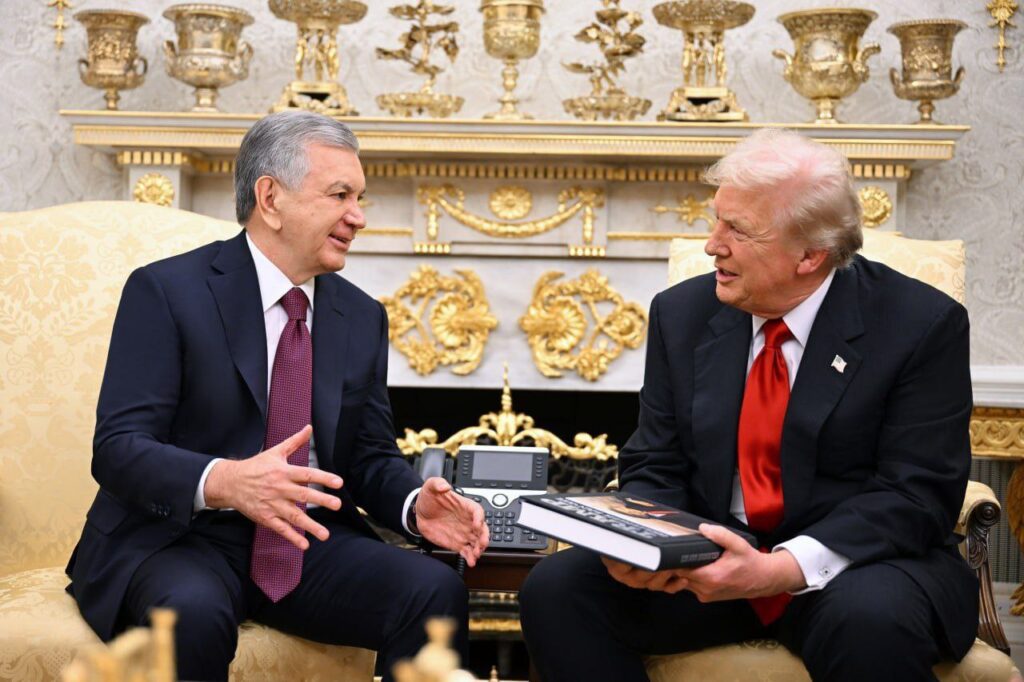
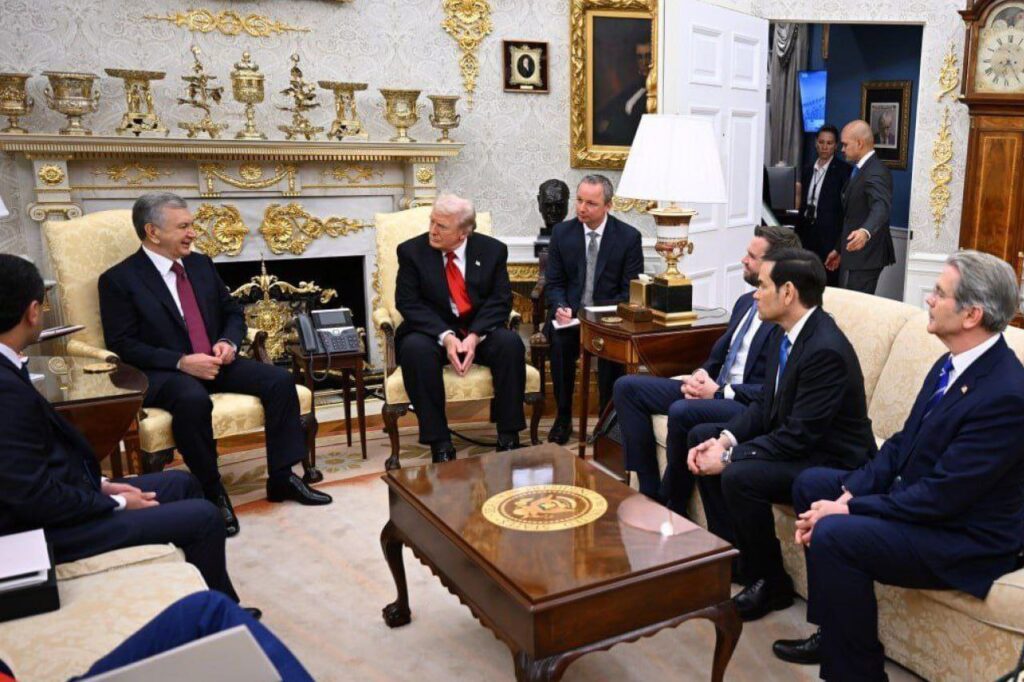
On November 6, 2025, President Shavkat Mirziyoyev met with U.S. President Donald Trump at the White House following the C5+1 summit in Washington—the latest milestone in a strategic partnership that has grown significantly over the past three decades.
During their private bilateral meeting in the Oval Office, the two leaders oversaw the signing of $34.5 billion in economic agreements and trade contracts, under which American companies will implement major projects across Uzbekistan. The high-level meeting, which followed a September encounter at the UN General Assembly, underscores Uzbekistan’s emergence as America’s most reliable partner in Central Asia at a time of growing U.S. interest in the region
From the early years of its independence, Uzbekistan established diplomatic relations with one of the world’s leading democratic nations — the United States of America, which was among the first to recognize its sovereignty 34 years ago. This event marked not only the beginning of diplomatic relations but also laid the foundation of mutual trust, respect, and solidarity between the two peoples. Thus, a solid base was created for multifaceted cooperation — from political dialogue and economic ties to cultural and educational collaboration.
In the mid-1990s, relations between Uzbekistan and the United States entered a new stage. In June 1996, the official visit of Uzbekistan’s First President to Washington gave fresh impetus to bilateral relations. That visit was not merely a formal occasion but became a symbolic turning point for future unity and partnership. During the trip, a number of important agreements were signed — on developing gas fields in Bukhara, introducing a leasing system in agriculture, and financing joint production in the aviation industry.
During this period, major companies such as Bank of America, Newmont Mining, Mitsui, AIG, Kellogg, IBM, and Boeing began operating in the Uzbek market. Notably, the “Zarafshan–Newmont” gold mining project, built in the Kyzylkum desert, was completed in a short time and became a symbol of reliable partnership. This initiative represented not only economic benefit but also the spiritual embodiment of friendship between the two nations.
Since 2017, under the leadership of President Shavkat Mirziyoyev, Uzbekistan has pursued a policy of openness and pragmatism in foreign affairs. Democratic reforms, the protection of human rights, and improvements in the investment climate have been highly appreciated by the United States. The official visit of President Mirziyoyev to Washington in May 2018 opened a new chapter in bilateral relations. The visit yielded significant results not only in political but also in economic and cultural spheres. The renewed image of Uzbekistan, its free market environment, and favorable conditions for investors sparked great interest among American business circles. Agreements signed and negotiations held during that period elevated relations to a new qualitative level.
Today, a solid legal framework of more than 100 treaties and agreements exists between the two countries. By the end of 2022, bilateral trade turnover had reached $436.8 million, nearly double that of 2020. Uzbekistan imports modern technologies, industrial equipment, and food products from the United States, while its exports consist mainly of cotton fiber, chemical products, and non-ferrous metals. Cooperation in agriculture, energy, and information technology continues to expand steadily. IBM plays an important role in digitalizing the national banking system, while Boeing contributes significantly to the modernization of Uzbekistan’s aviation infrastructure.
In 2020, the format of the “Strategic Partnership Dialogue” was introduced, aimed at deepening discussions in political, economic, security, and humanitarian spheres.
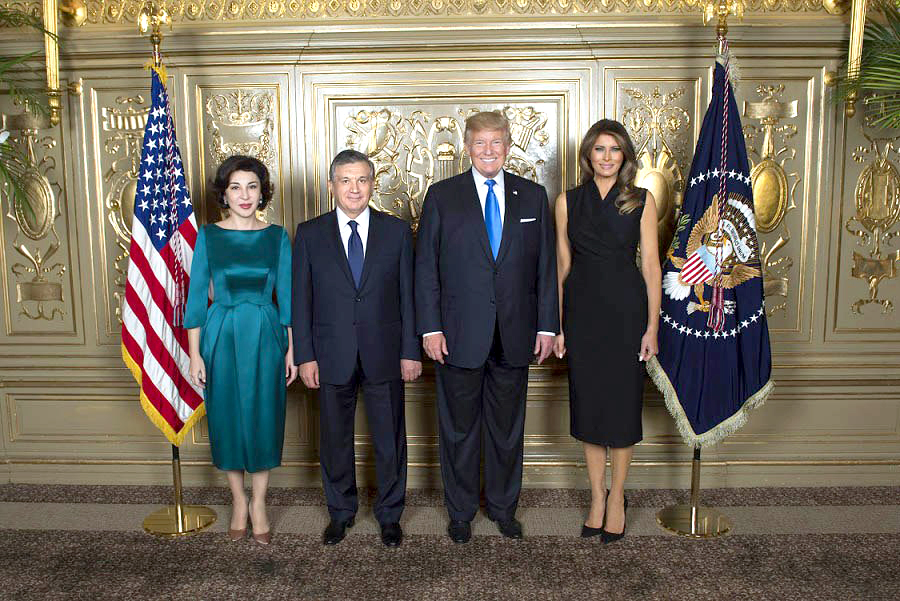
The year 2025 has become a milestone in the history of bilateral relations. In September, within the framework of the UN General Assembly in New York, President Shavkat Mirziyoyev met with U.S. President Donald Trump. During the talks, a number of agreements were signed to strengthen strategic partnership.
Two months later, on November 6, President Mirziyoyev and Donald Trump held a meeting at the White House during the “C5+1” summit in Washington. The leaders discussed ways to deepen political dialogue and expand trade, economic, and cultural-humanitarian cooperation. Trump, in a post on his own social media platform, Truth Social, announced that following talks, Uzbekistan “will be purchasing and investing almost $35 billion and, in the next 10 years, over $100 billion.”
President Mirziyoyev invited Donald Trump to pay an official visit to Uzbekistan — a vivid expression of the atmosphere of mutual respect and sincere trust between the two nations.
Today, Uzbekistan–U.S. relations are not limited to political or economic spheres. They are gaining new dimensions in science, education, ecology, interfaith dialogue, culture, and humanitarian cooperation. Initiatives are being promoted to establish direct partnerships between certain regions of Uzbekistan and individual U.S. states. This serves as a “people-to-people” bridge of friendship, bringing nations closer together.

At a time when U.S. interest in the Central Asian region is growing, Uzbekistan — pursuing an open, pragmatic, and stable policy — is emerging as the region’s most reliable partner. The current stage of relations is a bright example of a strategic partnership based on mutual interests, trust, and shared aspirations for the future. Enriched with new content under the leadership of President Shavkat Mirziyoyev, these relations have risen to a new qualitative level. This partnership today serves not only the prosperity of the two nations but also the peace, stability, and development of the entire Central Asian region.
Dildora Ibrohimova,
“Ishonch”, Uzbekistan